A First Play with an Interval: A Quiet Plan for the Evening
A first play with an interval feels easier to enter when you know what to read, where to pause and which detail to carry into the journey home.
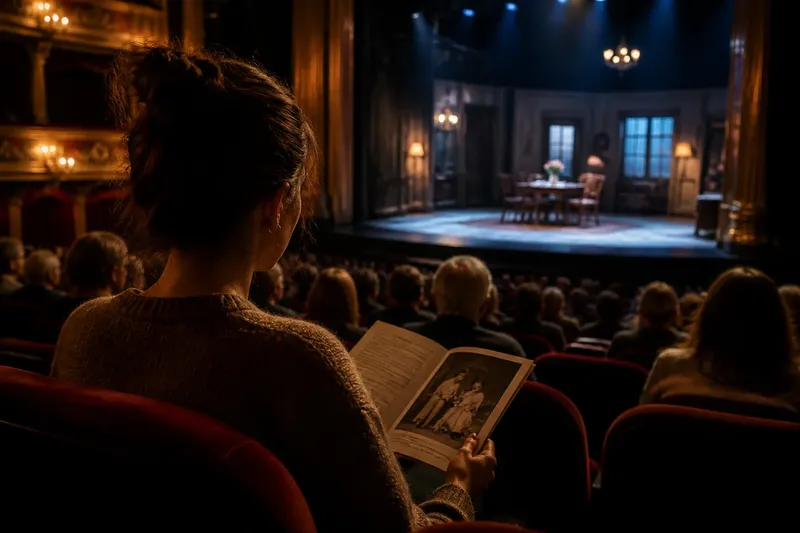
You are standing beneath the theatre’s canopy, programme folded in one hand, while the queue inches towards the doors. A first play with an interval can feel simpler if the evening has a few quiet landmarks: a glance at the programme, a place to stretch, and one detail to take home. None needs to become homework.
What should you read before the performance?
Start with the practical information: running time, interval arrangements, latecomer policy and any access notes. These details help you decide when to arrive and whether you want to leave a coat in the cloakroom. Check the theatre’s own website or the ticket information if anything is unclear.
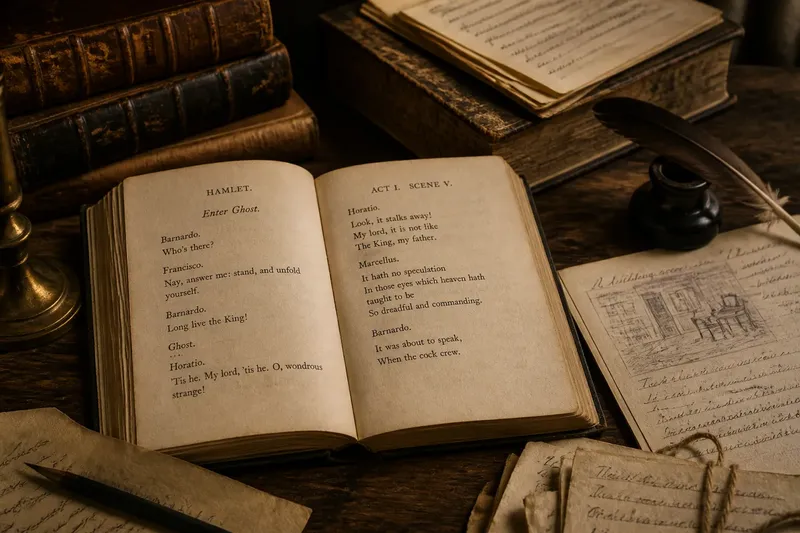
Then read the short description of the play, if one is available. A sentence about the setting or central situation can give you a foothold without closing down the surprises. You do not need to know the ending, the history of every character or the director’s full approach before the lights dim.
The programme itself can wait until you are seated. Some people like to read the cast list beforehand; others prefer to meet the performers without names in mind. Either choice is fine. If the print is small, a digital programme or a quick look at the theatre’s online cast page may be more comfortable.
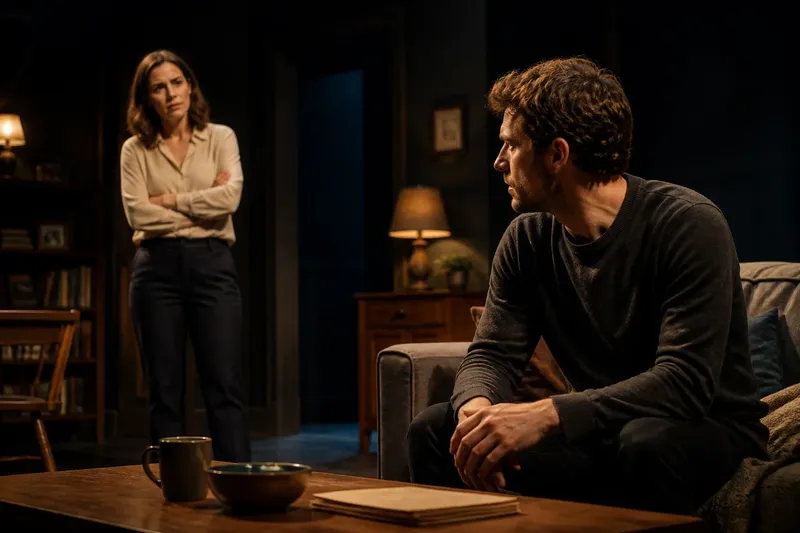
Imagine you are seeing a play whose description mentions a family gathering. You might read that line, then put the rest aside. The useful preparation is simply knowing to watch how people behave around one another; the scene itself can still surprise you.
How early should you arrive?
Choose an arrival time that leaves room for the journey to be imperfect. A delayed bus, a long walk from the station or an unfamiliar entrance can make a tight schedule feel needlessly tense. Check the theatre’s location and entrance details, then allow enough time to find your seat without rushing.
Arriving early is not an obligation to socialise or to inspect every poster. You can sit quietly, look at the set if it is visible, or read the programme. If the auditorium is not yet open, the foyer offers a place to settle and get your bearings.
Consider small comforts before leaving home: wear something you can sit in for the whole performance, bring glasses if you use them, and keep your phone charged for travel details. Silence the phone before the performance starts. If you need to keep it available for an urgent reason, ask front-of-house staff about a discreet option.
Seating can shape the experience, but there is no single best place for a first visit. The view, sound, legroom and price vary by venue and production. If you have a particular access need, contact the theatre in advance to ask about suitable seating and facilities rather than trying to solve it at the door.
What can you watch for during the first act?
You do not need to catch every line or decide what the play means while it is still unfolding. Let the story arrive at its own pace. A first act often gives you people, circumstances and questions; it may not yet offer a clear answer about where they are leading.
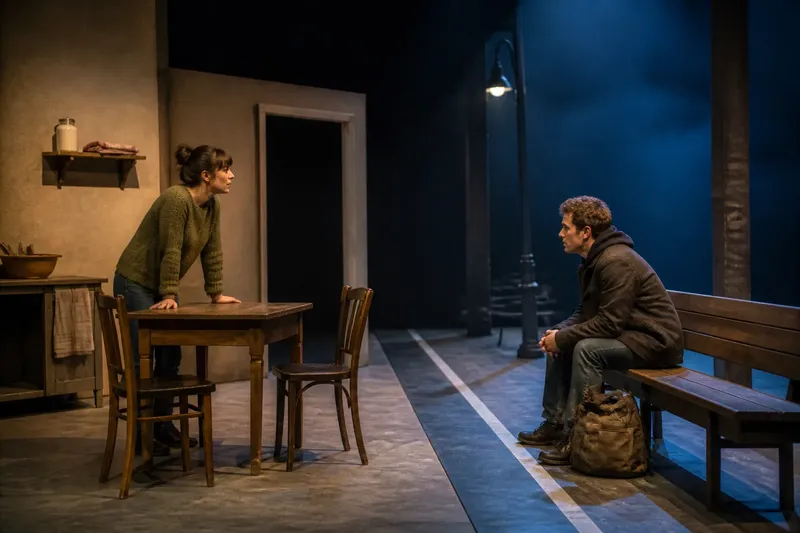
Choose one modest thread to follow. Notice who seems to control a conversation, what changes when someone enters, or how a character behaves when another person is absent. This is not a test of attentiveness. It is a way to give your attention somewhere to rest if the plot feels unfamiliar.
Keep the focus on what happens on stage rather than trying to interpret every design choice. A chair moved across the room, a change in lighting or a repeated sound may catch your eye. You can simply register it and see whether it returns. The performance will offer its own context, or leave the detail open.
If you miss a line, stay with the scene. Actors’ gestures, pauses and responses often make the immediate situation clear enough to continue. Replaying a missed sentence in your head can pull your attention away from the moment that follows.
How can you use the interval without making it homework?
The interval is a break, not a compulsory discussion session. You might get a drink, visit the facilities, stretch your legs or stay in your seat. If the foyer is busy, choose the option that feels easiest rather than trying to use every minute efficiently.
Carry one small observation into the break. It could be a shift in a relationship, a sound that stayed with you, or a moment when the audience responded together. You do not have to turn it into an interpretation. A brief note on your phone can help if you enjoy remembering details, but there is no need to write anything down.
If you are attending with someone, ask a simple question: “What’s stayed with you so far?” That invites a response without demanding agreement or a complete account of the plot. You may have noticed different things. Let both stand; the second act may alter what either of you thought.
Some productions have a short interval, and the queue for refreshments or toilets may take time. Check the theatre’s interval notice if you need to plan around it. If you would rather remain in the auditorium, that is a perfectly complete use of the pause.
What helps you settle into the second act?
When the lights return, set aside the urge to solve the first half. A question left unanswered may be deliberate, or the play may be more interested in the effects of a choice than in explaining it. Watch what the characters do with the situation they have made.
You can keep following the detail you chose earlier, but allow it to change. Perhaps the person who seemed to lead the conversation now listens; perhaps a sound that felt incidental becomes more noticeable. If nothing returns, that is not a failure of attention. The detail was a way into the evening, not a clue you were required to decode.
It is also fine to change your mind about a character. Live performance unfolds in front of you, and an actor’s timing or a new piece of information can make an earlier moment look different. You are not expected to settle on one reading before the final scene.
What might you ask after the curtain?
Give yourself a moment before reaching for a verdict. Some plays feel clear at once; others leave a particular image or question behind. On the walk out, you might notice what you are still thinking about rather than deciding whether you “liked” the whole evening.
With a companion, try a concrete prompt: “Which moment are you still seeing?” or “Did anything change for you after the interval?” These questions leave room for a small answer. A conversation can be about a look, a costume, an unexpected laugh or the way a scene ended, not a polished review.
If you came alone, the same reflection can happen privately. Jot down a phrase, send yourself a voice note or simply carry the thought onto the bus. You may want to read the programme’s notes afterwards, once your own response has had space to form.
Say you leave thinking about a lamp that stayed lit while two characters argued. You might tell your companion, “I kept noticing the light between them.” They could remember a line instead. That exchange need not settle what the lamp meant; it gives each of you a specific part of the performance to take away.
What do first-time theatre visitors often wonder?
Do I need to read the play before I go?
No. A short plot description can orient you, but reading the whole script is optional. If you prefer to meet the story without prior knowledge, arrive with only the practical details in hand.
When should I read the programme?
Read it before the performance if knowing the cast and creative team helps you settle. If you would rather avoid advance context, save it for the interval or afterwards; the production does not require you to study it.
Is it all right to leave during the interval?
Yes, if you need to leave, though it is sensible to check the venue’s re-entry arrangements before stepping out. If you are unsure, ask an usher discreetly during the interval.
What if I do not understand the ending?
You can still have a full experience without resolving every question. Notice what the ending made you feel or reconsider, then let conversation or a later reading add possibilities rather than forcing a single answer.
What makes the journey home part of the evening?
There is no need to produce a review on the pavement. Let one observation accompany you: a change in a character, a striking stage image or a response from the audience. If you are looking for a first play with an interval, this small habit can make the visit feel more manageable while leaving the performance free to surprise you.
Keep the plan light enough to bend. Read what helps, arrive with a little breathing room, take the interval in the way you need, and leave with one detail rather than a verdict. The play has already done the work of being live; your part is simply to be there for it.